Choose Your Dinner Party Style
Before you choose the menu, picture the evening.
Are your guests passing dishes around a shared table? Are they looking forward to four individually presented courses, each bringing something new? Or do you imagine a lively room where people can mingle and enjoy food throughout the celebration?
The dining style helps shape everything that follows—from the menu and presentation to the seating and pace of service. Here are three ways to bring your gathering to life.
Family style: share the meal around the table
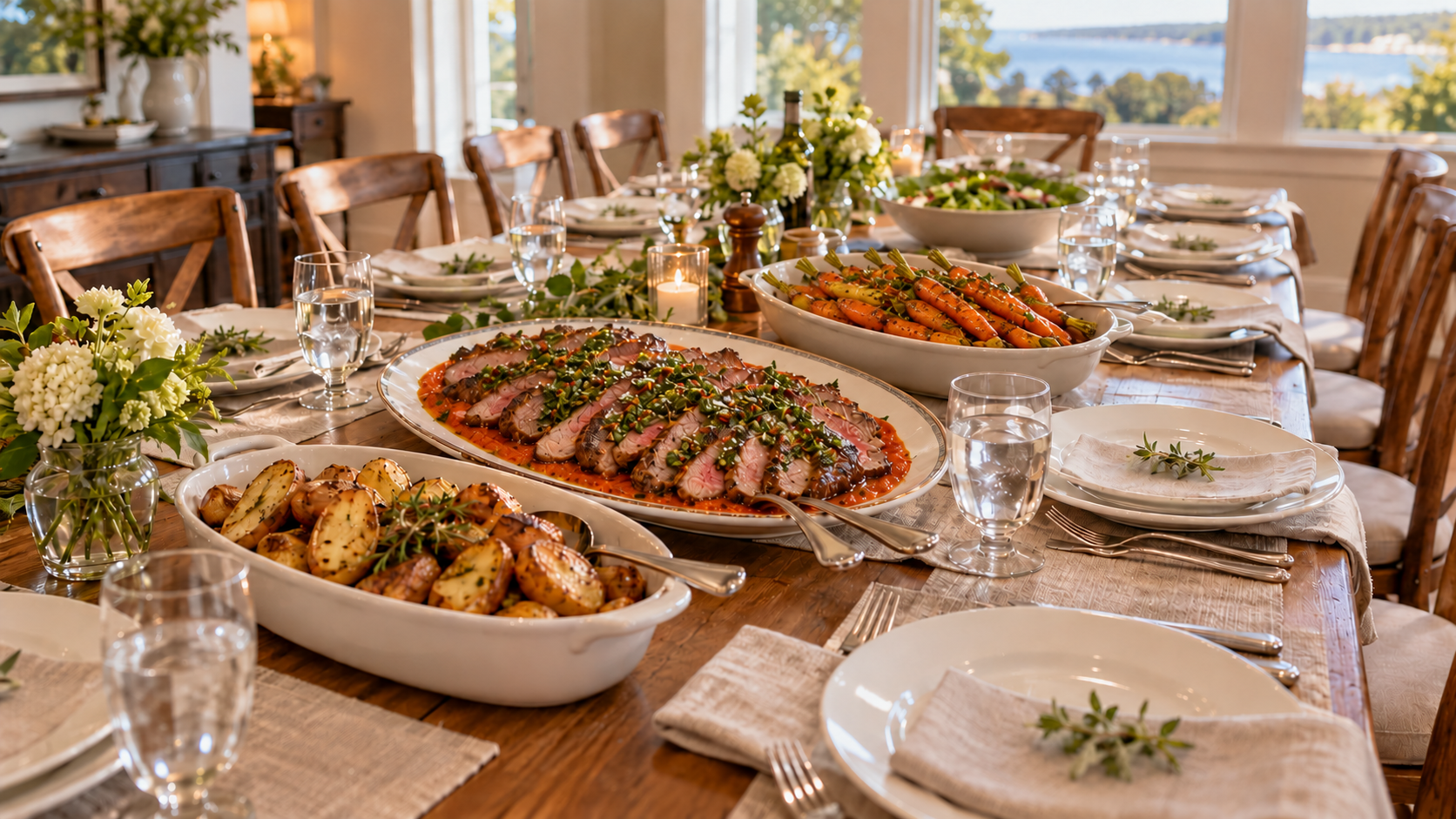
Family-style dining starts with an appetizer and an entrée, with the option to add more courses. It’s often a good fit for larger groups who prefer fewer courses and a relaxed meal together.
Shared platters and serving dishes invite guests to pass food, help themselves, and enjoy the conversation around the table. The format is flexible, allowing you to keep the meal simple or add courses to suit your occasion.
When planning your table, leave comfortable space for serving dishes alongside place settings and glasses.
Small plates: four individually presented courses
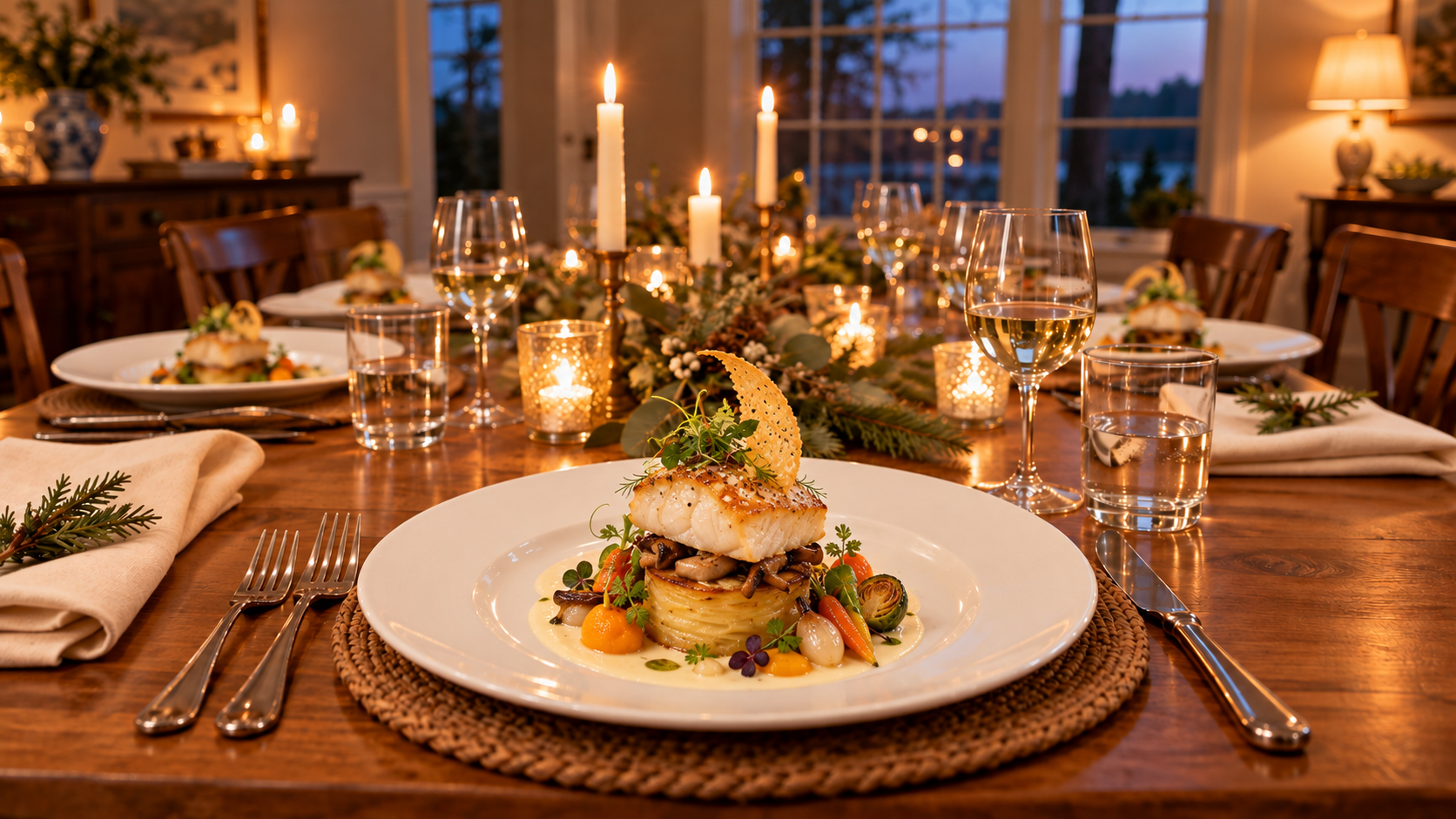
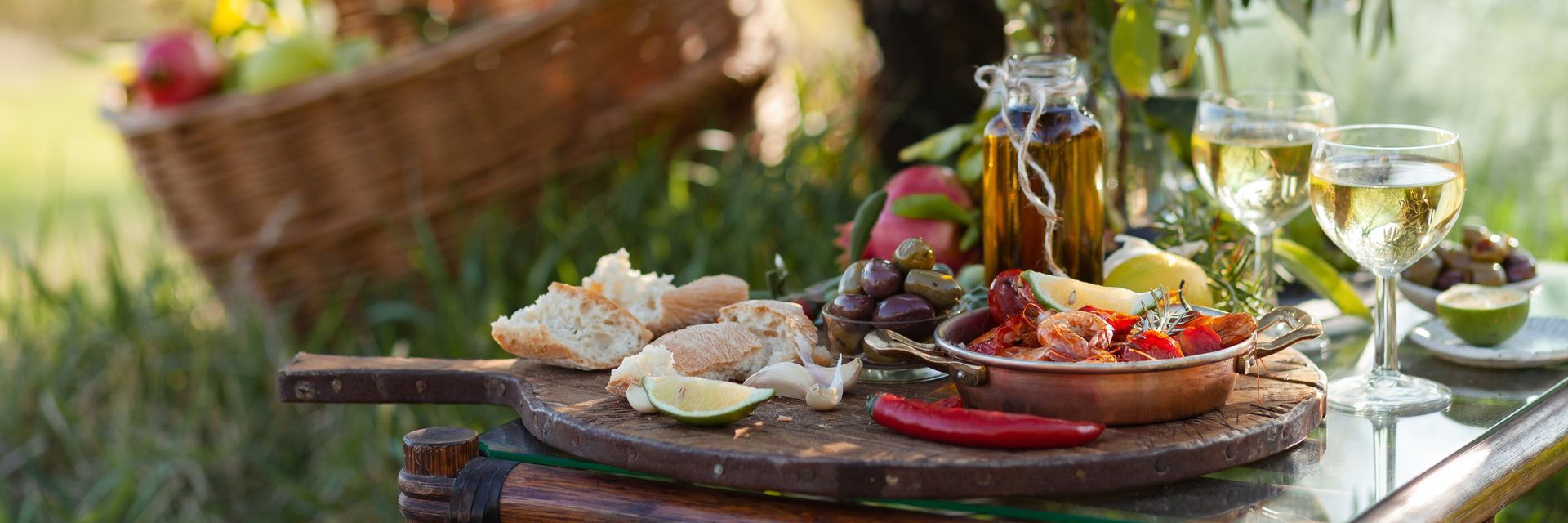
A small-plates dinner offers four individually plated courses, each with its own combination of flavors, textures, and presentation. Guests remain seated as the meal unfolds, enjoying a variety of dishes throughout the evening.
“Small plates” describes the portions within each course. The four courses are planned together as a complete dinner, with attention to balance and pacing.
This style is especially appealing to guests who enjoy exploring different flavors and appreciate the details of a beautifully presented plate. It gives each dish its own moment at the table.
A cocktail party: keep the conversation moving
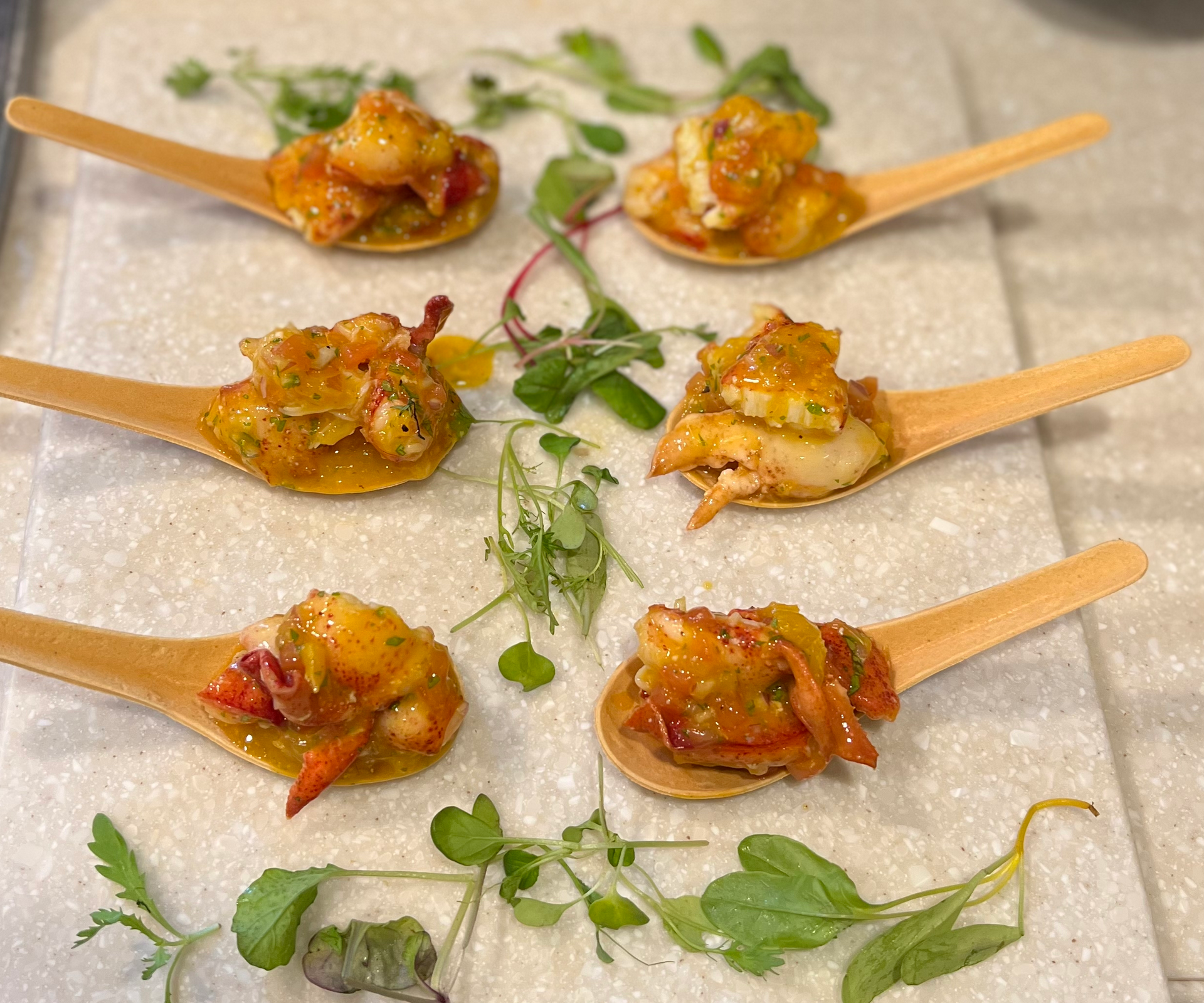
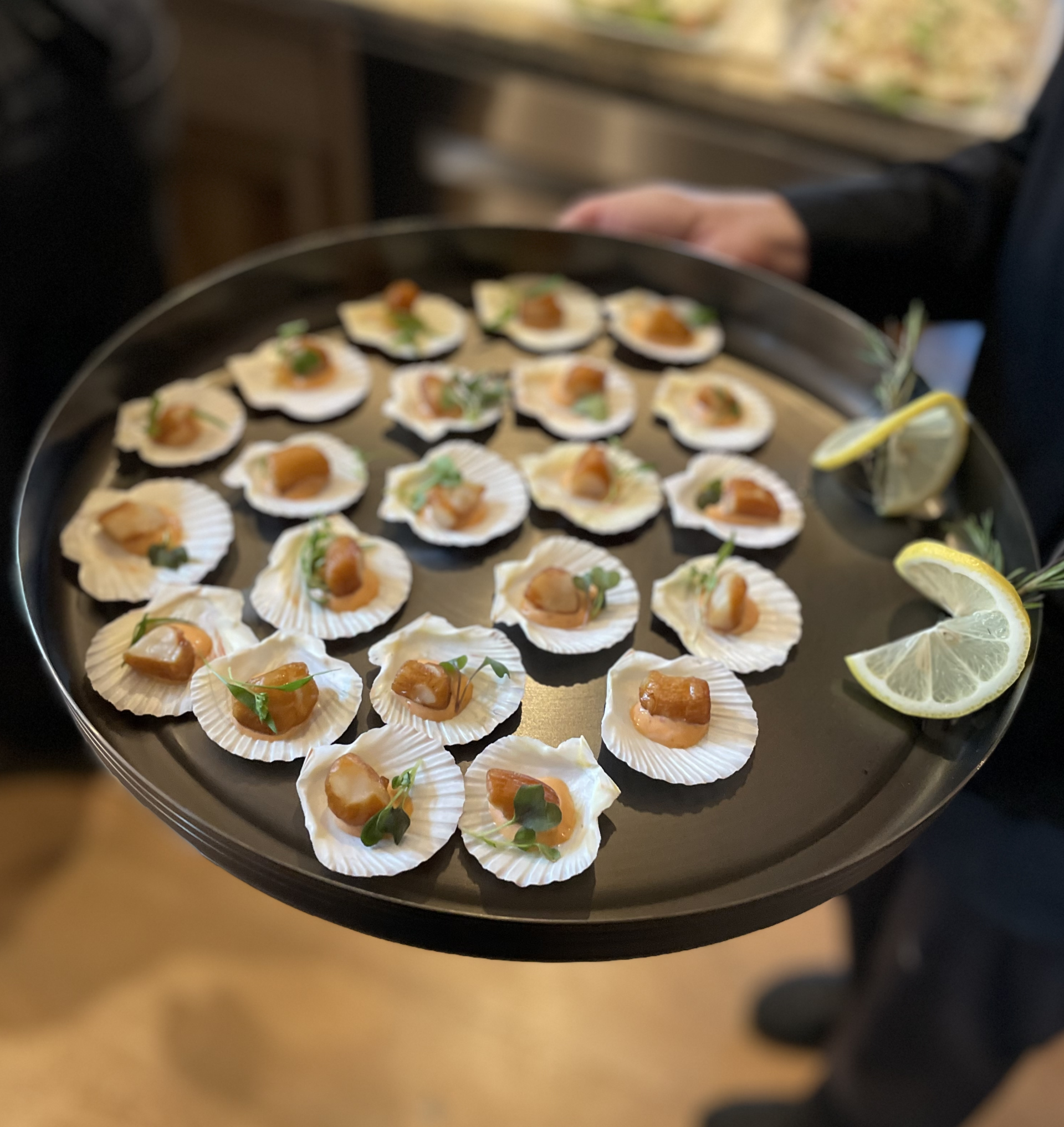
A cocktail party gives guests the freedom to move around and spend time with different people. Food is planned for an evening of mingling, with bites that are comfortable to enjoy while standing or moving between conversations.
The menu should reflect the timing and purpose of the gathering. A reception before dinner calls for a different amount and selection of food than a cocktail party that takes the place of the evening meal.
Consider how guests will use your space, where drinks will be served, and where people can sit when they want a break. Thoughtful food and service planning helps the gathering feel comfortable from the first arrival through the final round of conversation.
Choose the experience, then build the menu
Your guest count, available seating, space, and timing all help determine which format will work best. Your guests’ dietary needs and the occasion itself help guide the menu.
You do not need to have every detail decided before reaching out. Start with what you know: who is coming, what you are celebrating, and how you would like to spend the evening together.
Chef Trish creates personal chef experiences in Connecticut and Rhode Island, with menus planned around your gathering. Visit Plan Your Event to tell us about your occasion and explore the dining style that suits it.